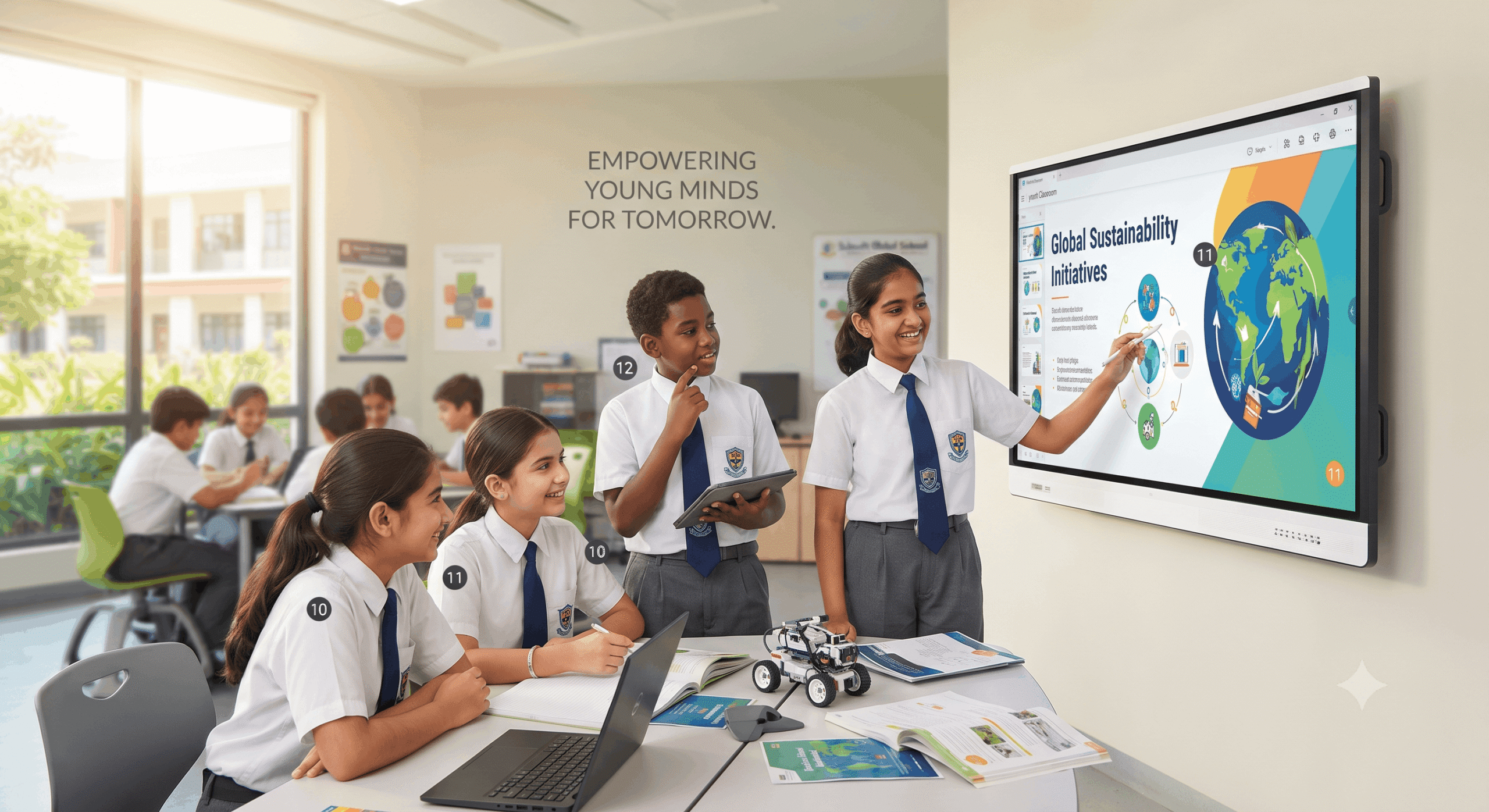



Parents usually judge a school by its results, teachers, and reputation. Those matter, but so does the place where a child spends six or seven hours every day. Light, air, noise, space, books, laboratories, and playgrounds all shape how much teaching a student actually absorbs. Good school facilities do not replace good teachers. They give good teachers room to work.
Subodh Global School has put together this guide for Jaipur families who want a clearer way to understand how campus infrastructure supports learning, which facilities deserve a closer look, and how to evaluate them during a visit.
Why School Facilities Matter for Learning ?
A research synthesis titled The Impact of School Infrastructure on Learning reviews the evidence on how physical settings affect children’s outcomes. It points to factors such as class size, how well learning spaces are used, and the engineering qualities of a building, including natural light, temperature and air quality, as contributors to how people function in a space. Other published work reaches a similar conclusion: when a school building is in poor condition, attention, attendance and teaching quality can all suffer.
The practical meaning is simple. A child who is too hot, cannot hear the teacher over outside noise, or has no access to a library or laboratory has fewer chances to learn, however strong the curriculum looks on paper. Many subjects also depend directly on infrastructure. Without a proper laboratory, practical science is difficult to teach. Without a play area, physical education becomes a theory lesson.
The Learning Environment: Light, Air, Noise and Space
The most overlooked parts of a campus are the ones that do not appear in a brochure’s photo gallery. The basic comfort of a classroom affects concentration every minute of the day.
Natural light and ventilation
Classrooms with good daylight and fresh air help students stay alert. In a city like Jaipur, where summers are long and hot, ventilation, shaded corridors and reliable cooling are not luxuries. A student who is uncomfortable spends energy on discomfort instead of on the lesson.
Acoustics and noise control
Research summaries on school buildings link quieter classrooms with better engagement and achievement. A classroom near a busy road, a noisy corridor or an open play area without sound separation makes it harder for younger children in particular to follow instructions.
Space and seating
Classrooms with enough room let teachers organize group work, discussions and activities instead of keeping every lesson in rows. Furniture that suits the age of the child matters as much as the floor area.
Smart Classrooms and Digital Learning
Smart classrooms combine a teacher’s explanation with visuals, audio, animations and interactive content. For subjects such as geography, biology or geometry, seeing a process unfold on a screen can make an abstract idea concrete. The value, however, depends on how the technology is used. A projector that only replaces the blackboard adds little. Interactive tools that prompt questions, quizzes and discussion do more.
When you visit a campus, ask to see a lesson in progress, not just an installed screen. Ask how teachers are trained to use the equipment and how often it is used in a normal week.
Science Labs and Practical Learning
Science labs turn textbook statements into experience. Students who handle apparatus, record observations and discuss unexpected results learn the method behind the facts, which is what examinations and later study actually test. Separate laboratories for physics, chemistry and biology, along with a computer lab, also signal that the school takes practical work seriously.
Look for enough equipment for students to work in small groups, clear safety arrangements, and a timetable that includes regular practical periods. A beautiful lab that is used twice a year does little for learning.
Libraries and Reading Spaces
A library builds the reading habit that supports every subject. Children who read widely tend to write and reason better. A good school library is more than a store of textbooks. It has storybooks for younger readers, reference material for projects, newspapers and magazines, and a quiet corner where students can work independently. A librarian who guides students toward books they will enjoy makes a noticeable difference.
Sports, Play and Physical Wellbeing
Playgrounds and indoor game areas are part of the learning environment, not a break from it. Regular physical activity supports attention, mood and sleep, and team sports teach cooperation, discipline and how to handle losing. Check whether the school has space for several activities at once, whether sports periods are protected in the timetable, and whether trained staff supervise them.
Early Years Spaces Need Different Design
Young children learn through touch, movement and play, so their spaces should look different from a senior classroom. Families searching for the Best Pre-primary schools in Jaipur should look for low furniture, soft flooring, safe outdoor play areas, bright but calm walls, and washrooms designed for small children. Activity corners for art, building and storytelling matter more at this stage than screens. Staff visibility is also important: a good early years classroom lets teachers see and reach every child easily.
Safety, Hygiene and Health Support
Children cannot learn well when they feel unsafe or unwell. Basic safety and health arrangements deserve as much attention as any laboratory:
- Controlled entry and exit, and supervised arrival and dismissal.
- CCTV coverage in common areas, with clear rules on how footage is handled.
- Clean drinking water and well-maintained washrooms.
- A medical room with first aid and a clear plan for emergencies.
- Safe, supervised transport where the school provides it.
- Fire safety equipment and clearly marked exits.
Clean, healthy surroundings also support attendance. Students who are ill less often miss fewer lessons, and that consistency adds up over a school year.
What Changes at the Senior Level ?
As students move into higher grades, the demands on infrastructure change. Subject streams need specialized labs, a well-stocked reference library, quiet study spaces and reliable internet for research. Parents comparing Senior Secondary schools in Jaipur should ask how practical work is scheduled for Classes 11 and 12, what career guidance space and counselling support exist, and how the school supports students preparing for board and entrance examinations. Families interested in the senior years at Subodh Global School can use the same questions when they speak with the admissions team.
How Parents Can Evaluate School Facilities in Jaipur
A campus visit tells you far more than a website, and Subodh Global School invites parents to ask the same questions on any tour. When you shortlist from the Best Schools in Jaipur, use the visit to test whether the school facilities match what is promised. Here is a practical way to approach it:
- Visit during a normal school day, not only during an open house, so you see spaces in real use.
- Walk through classrooms, laboratories, the library and washrooms, not just the reception and the main hall.
- Ask how often each facility is used by each grade. Frequency matters more than size.
- Look at maintenance. Working fans, clean floors and intact furniture show how much care the school takes day to day.
- Talk to teachers and current parents about how the facilities help in daily teaching.
If you plan to see the campus of Subodh Global School, use the same checklist you would apply anywhere else, and ask the admissions team to show you the spaces your child will use most.
The table below summarises what each type of facility contributes and what to look for.
| Classrooms | Comfort, focus and room for group work | Light, ventilation, low noise, suitable furniture |
| Smart classrooms | Visual and interactive explanation | Regular use, trained teachers, interactive content |
| Science labs | Practical understanding of concepts | Enough equipment, safety rules, scheduled practicals |
| Library | Reading habit and independent research | Range of books, quiet space, librarian support |
| Sports areas | Fitness, teamwork and attention | Variety of activities, trained coaches, protected periods |
| Health and safety | Wellbeing, attendance and peace of mind | Medical room, secure entry, clean water, safe transport |
Facilities Support Teachers Too
Good infrastructure affects staff as much as students. Teachers who have working equipment, enough space and a comfortable staff area can plan more varied lessons and spend less time solving practical problems. When the building supports teaching, the benefit passes straight to the classroom. In the study from Insan Prima Bekasi National School, for example, functioning facilities allowed teachers to use more diverse methods, while broken or missing ones limited them.
Choosing a School Where Facilities Serve Learning
Strong school facilities are not about size or expensive equipment. They are about whether each space has a clear learning purpose, is looked after, and is used often by the students it was built for. A comfortable classroom, a working lab, a lively library, a safe playground and a healthy campus together create the conditions in which good teaching can succeed.
For families in Jaipur, the best approach is to visit, observe and ask specific questions. Subodh Global School welcomes parents who want to understand how campus spaces support learning at each stage of a child’s education.
Frequently Asked Questions
What are school facilities?
School facilities are the physical spaces and resources that support daily learning and wellbeing. They include classrooms, smart classrooms, science labs, computer labs, libraries, sports areas, art and music rooms, washrooms, medical rooms, transport and safety systems.
How do school facilities affect student learning?
They shape comfort, attention and access to practical experience. Good light, ventilation and low noise help students concentrate, while labs, libraries and play areas give them ways to learn beyond the textbook.
Which facilities matter most for young children?
For early years, safe play areas, age suitable furniture, soft flooring, clean child friendly washrooms and activity corners matter most. Teachers should also be able to see and reach every child easily.
Are smart classrooms necessary for good learning?
They are helpful, not essential. Smart classrooms work best when teachers are trained to use interactive content that prompts questions and discussion, instead of using the screen only as a replacement for the blackboard.
How can I check facilities during a campus visit?
Visit on a normal school day, see classrooms, labs, the library and washrooms, and ask how often each space is used by each grade. Notice how well the building is maintained, and speak with teachers and current parents.
Do sports and library facilities really help academics?
Yes. Regular physical activity supports attention, mood and sleep, and a good library builds the reading habit that helps every subject. Both are part of the learning environment, not extras.
What safety facilities should a good school have?
Look for controlled entry and exit, CCTV in common areas, clean drinking water, a medical room with first aid, fire safety equipment, clearly marked exits and supervised transport where the school provides it.
Do facilities matter more than teachers?
No. Teachers remain the most important factor. Facilities give teachers the space, tools and conditions to teach well, so the two work best together.
Follow us on – Instagram , Facebook